
Drisya Vilaya
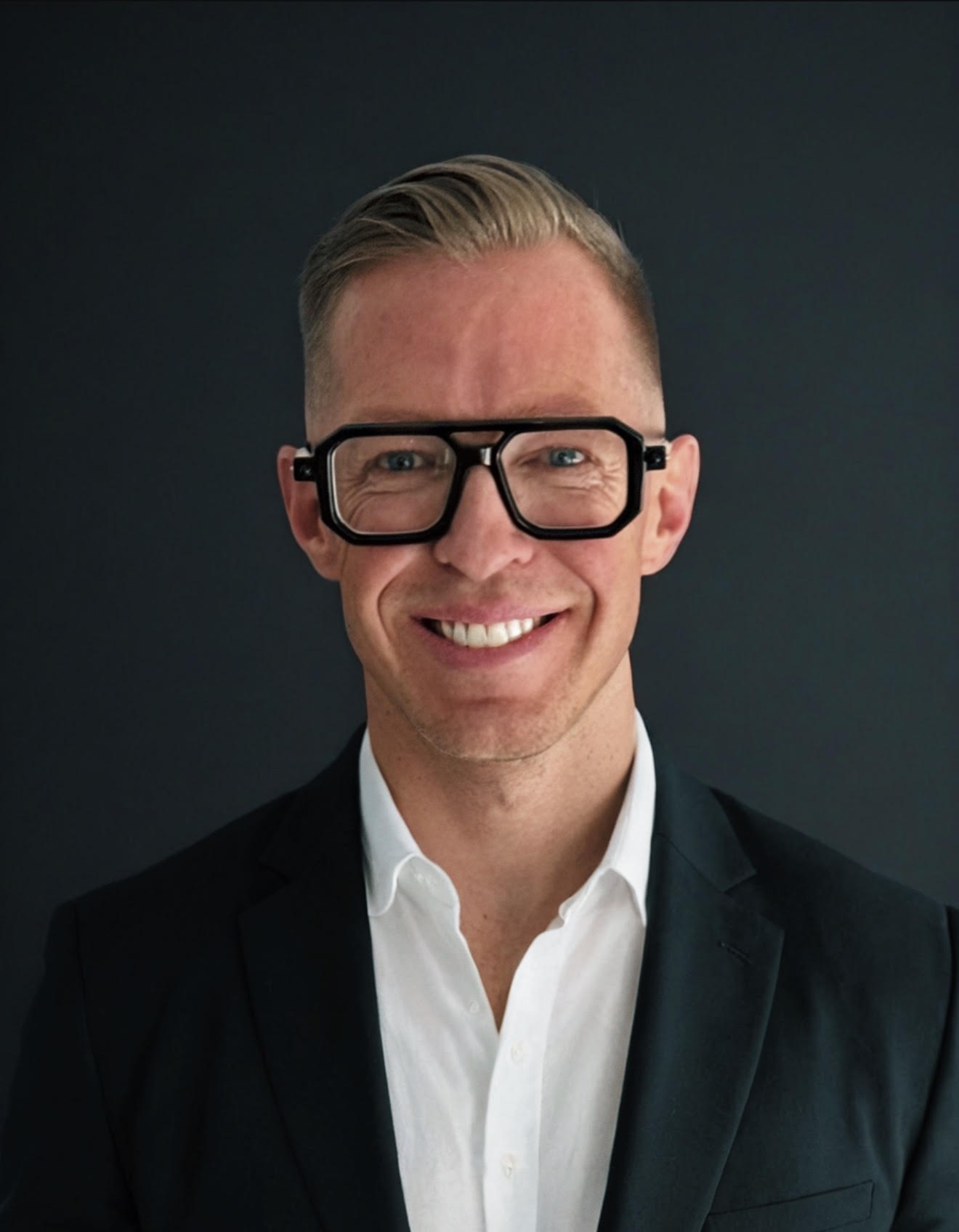
Drisya Vilaya is the developer of Shamanadvaita. It is his life's work. He provides his services to a number of senior executives, founders, and investors.
He began with the question of what subjectivity actually is, its nature, long before having any interest in altering it. That meant Advaita Vedanta studied devotionally rather than academically — Shankara, Ramana Maharshi, Nisargadatta Maharaj — and self-inquiry practised as a discipline: the sustained attempt to hold to I AM as a thought-feeling, to the exclusion of everything the mind attaches to it, until the individual falls away and what remains is Reality without a subject standing apart from it. He holds that modern science carries a structural blind spot for as long as it omits the qualitative character of the observer from its account of what the observer discovers.
The change work came after. His early technical formation is in the deep processes of Neurolinguistic Programming's Belief Change, Re-Imprinting, and identity-level work: the lineage running through Robert Dilts to Grinder and Bandler, and through them to Milton Erickson, Virginia Satir, and Fritz Perls. He applied those processes to himself at a volume almost no practitioner reaches: more than ten thousand hours, to the point where process work that takes a coach and client ninety minutes he could complete alone, for himself, in two to four.
The order matters more than it appears to. Practitioners who learn to modify the qualities of subjective experience almost never arrive with an account of what subjectivity is, and it shows: every direction looks equivalent, and the exercise reduces to figuring out what the client wants. Having had the account first, he found the opposite. Transformation has an architecture. Deep positive intentions converge across people, the effective routes to fulfilling them also converge, and the landscape of possible change therefore has a hierarchy rather than being flat.
Working at that volume, and then transposing the modality by applying it to itself, he found the work changing first into work performed on behalf of another person at a distance, and then beyond that. What followed was not arrived at through any text or teaching. It came through direct engagement, exploration, and at one point survival. What he encountered there he was eventually granted the standing to reorganise. He has held that standing since 2017 and has built on it continuously since.
What clients name most often is diagnostic rather than motivational: he locates the level at which an adjustment has to be made to produce the exact change wanted. Sector, business model, and technical particulars matter far less than where in a person's subjective architecture the leverage sits, and finding that is the skill, because most desired changes require multiple levers to achieve permanence.
He teaches the use of the system through a three-stage training sequence — the Outer, Medial, and Inner Sanctum — built on a principle: that no one else should have to do the work he did in order to have what it produced. The work was done once, and codified, so that it would not have to be done again.